With the introduction of mandatory NVAs for all bat emergence surveys, ecologists now face analysing hundreds of hours of footage. Not only is this time-consuming, but it also places significant pressure on the surveyor to confidently interpret activity and determine whether an event was an emergence.
Our cameras help ease that burden.
While traditional thermal cameras capture only a video stream, our technology goes much further. By recording the temperature of every pixel in every frame, you gain a dataset you can revisit and re-analyse at any time. This allows you to apply filters and adjust any visual aspect of the footage, even after it has been recorded, without altering the original data.
Get a Quote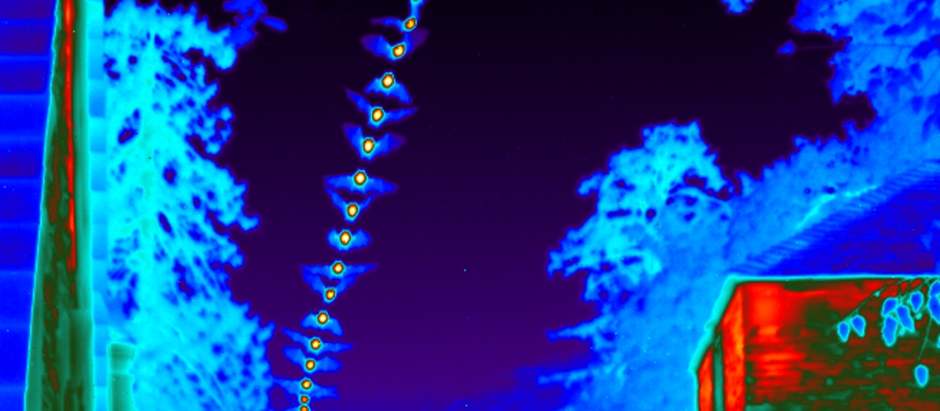
Tracking: This feature automatically follows all activity detected by the camera by monitoring changes in environmental temperature. You can choose to track peak temperatures or switch to our high‑sensitivity tracking mode for even finer detection.
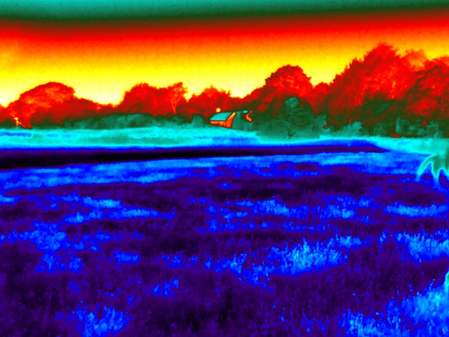
High Sensitivity Mode: This feature can be used standalone, but it is most powerful when combined with tracking. It shows temperature changes using a frame subtraction filter. This is highly effective against ‘busy’ backgrounds and warm buildings.
After analysing hundreds of hours of footage, we know activity is being missed without image enhancement. With high-sensitivity tracking, it is obvious what activity has taken place and is perfect for presenting to clients.
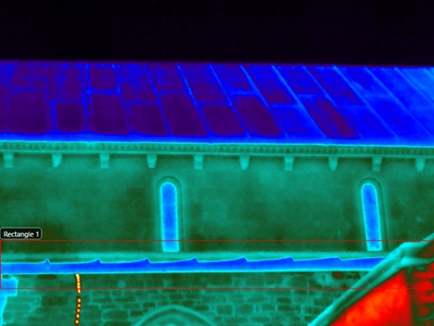
Detection: By plotting the changes in temperature acquired from the high-sensitivity filter and using additional noise filtering, we can accurately plot activity on a timeline. This allows you to instantly skip periods of inactivity, potentially saving hours for each analysis.
If an emergence is detected, the still frame can be instantly exported as a timestamped JPEG.